Project intelligence for industrial work
The digital memory layer for industrial projects.
PIP connects engineering, procurement, fabrication, quality, documentation and project information into one trusted project context—then gives your team an AI-powered way to understand and act on it.
Beta now • Partner demonstrations planned for early November 2026 • Pilot-ready release targeted for January 2027

The complete project picture
From scattered information to connected project intelligence.
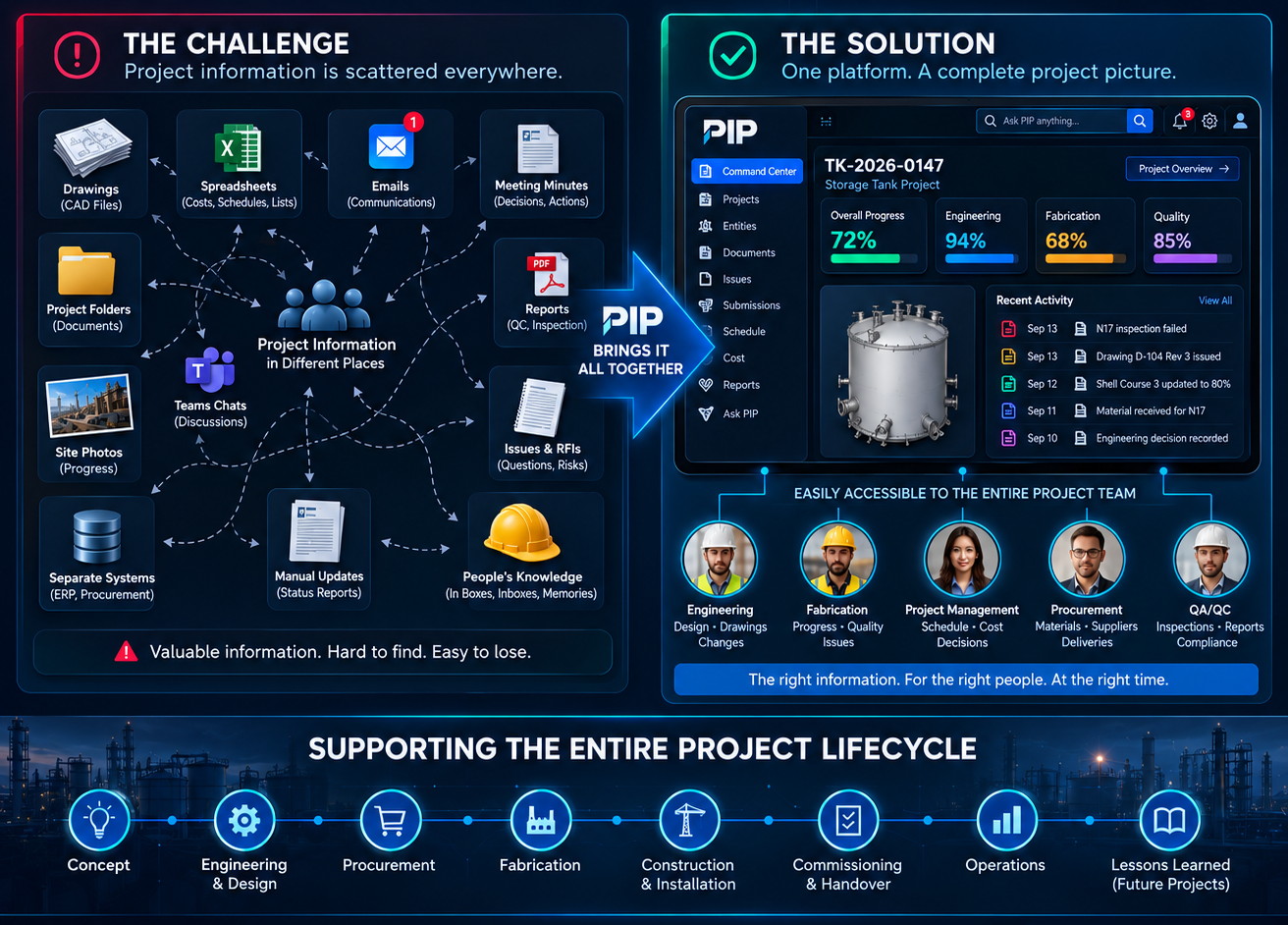
PIP brings drawings, spreadsheets, messages, reports, project systems and team knowledge into one shared context—making the right information easier to understand across the full project lifecycle.
The problem
Your project information already exists. The problem is that it lives everywhere.
Drawings, purchasing records, inspections, decisions and shop updates tell one project story—but that story is scattered across systems, departments and people.
CAD + Drawings
Design intent, revisions and technical details often sit apart from the work they affect. PIP helps connect them to the wider project story.
ERP + Purchasing
Purchase orders, suppliers and delivery dates shape project readiness. PIP brings that commercial context closer to execution.
Documents + Email
Critical decisions are frequently buried in files and conversations. PIP makes approved information easier to find in context.
Shop Progress
Production status can change faster than project reports. PIP helps teams see current progress, constraints and next actions.
QA/QC + Inspections
Inspection results, holds and non-conformances influence every handoff. PIP connects quality records to the items they govern.
Meetings + Decisions
Project direction often changes in meetings and informal discussions. PIP preserves decisions, reasons and accountable owners.
Spreadsheets
Important trackers fill gaps between systems but can become isolated. PIP helps place their information in a shared project context.
People's Knowledge
Experienced team members carry vital project history in their heads. PIP helps turn that knowledge into a durable company asset.
The PIP model
One connected project context.
From the first project record to final closeout, PIP creates a continuous information path that helps people understand what happened and what comes next.
Capture
People and connected systems contribute project information as work happens. Important updates enter the project record without losing their source.
Connect
PIP relates information to the right project, component, event, document, issue or decision. Each item gains the context needed to make it useful.
Understand
Current state and project history become available together. Teams can see not only what is true now, but how the project arrived there.
Act
Teams see what changed, what is blocked and what needs attention. Clear context supports faster, more confident decisions.
Learn
Completed projects become reusable company knowledge. Lessons, decisions and outcomes can inform the next project instead of disappearing.
Command Center
See the project. Understand what needs attention.
Identity, phase, dates, status and progress.
Issues, NCRs, blockers and readiness.
What changed, when and where.
Natural-language access to project intelligence.
Ask PIP
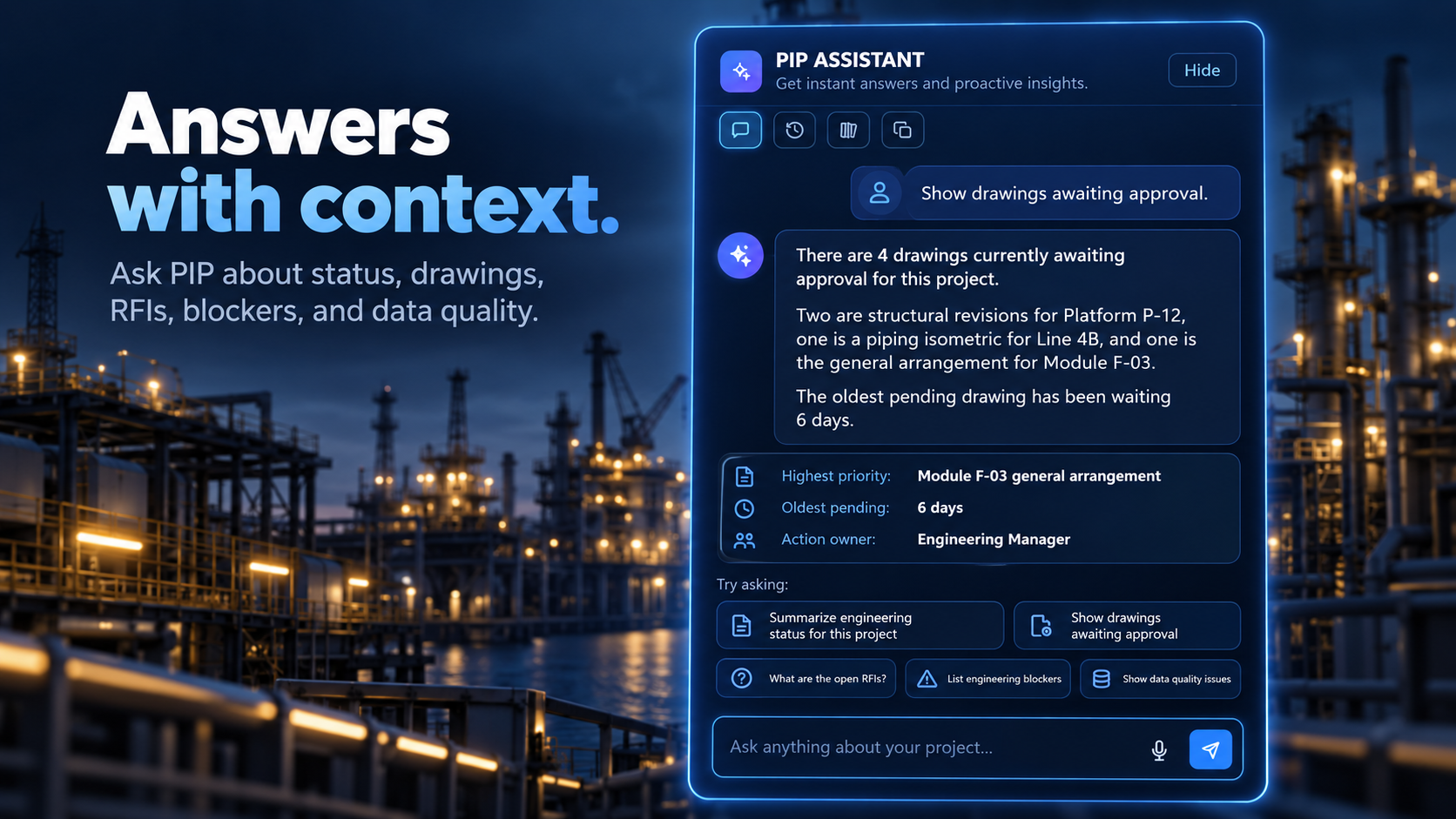
Ask the project, not the filing system.
PIP is designed to combine structured project data, history, documents and approved connected information to answer questions with supporting context.
Illustrative questions—not a live chatbot.
Role-aware intelligence
One project context. Different views for different roles.
Project Management
Milestones, blockers, changes and readiness.
Engineering
Revisions, decisions and component context.
Procurement
Purchasing dependencies and material status.
Fabrication
Work progress, holds and next actions.
Quality / Inspection
Inspections, NCRs, records and traceability.
Management
Portfolio attention and project intelligence.
Designed to complement
Connect the systems you already rely on.
Domain authority stays where it belongs
CAD, ERP, QA/QC, documents, purchasing and shop systems.
A connected backbone
Project identity, entities, relationships, events, history, issues, permissions and AI interpretation.
Context people can act on
Command Center, Ask PIP, project views, attention items and management intelligence.
PIP is designed to complement the systems of record your company already uses—not force every department into one replacement application.
Expected outcomes
Less reconstruction. More informed action.
PIP is designed to reduce the time teams spend rebuilding context and increase the time they can spend moving work forward.
Less information hunting
Bring related records and project history into one connected view so people spend less time searching across systems.
Faster issue response
Give teams the surrounding facts, ownership and dependencies they need to understand problems and respond sooner.
Better traceability
Preserve the relationship between decisions, revisions, inspections and outcomes throughout the project lifecycle.
Reusable company knowledge
Turn completed-project experience into a practical reference that can strengthen planning and execution on future work.
Pilot program
Help validate PIP on a real industrial project.
PIP is currently in Beta. External demonstrations are planned for early November 2026, with selected pilot projects targeted to begin in January 2027.
Explore the Pilot ProgramCould PIP help your team understand projects faster?
We are speaking with a small number of engineered-to-order manufacturers and industrial fabricators about early demonstrations and 2027 pilot projects.