How PIP works
Project information becomes more valuable when the pieces understand each other.
PIP is designed as a cross-functional intelligence layer built around the project—not another isolated department system.
Product interface
Project intelligence in one operational view.
The Command Center brings identity, progress, attention items, activity and natural-language project access into a shared project context.

A connected project model
PIP organizes context from the project down through equipment, assemblies, components and the related events, documents, issues and state around them. A tank, shell, roof, platform, nozzle, drawing, inspection and issue can be understood as parts of one evolving record.
Related events, documents, decisions, issues and current state remain connected to the right level.
History that stays intact
Important events remain part of the project record so teams can understand what happened, when and why.
Current state in context
PIP is designed to derive a useful present view from the connected project history—without erasing the path that led there.
AI as interpreter
People describe what happened. PIP connects it to project context.
“Tank 147 shell fabrication is 65% complete.” “N17 passed visual inspection today.” “Customer approved Rev C.” PIP is designed to determine where that information belongs and make it retrievable later. Ambiguous or high-impact interpretations can be presented for human confirmation.
Trust controls
AI assists. Project evidence remains visible.
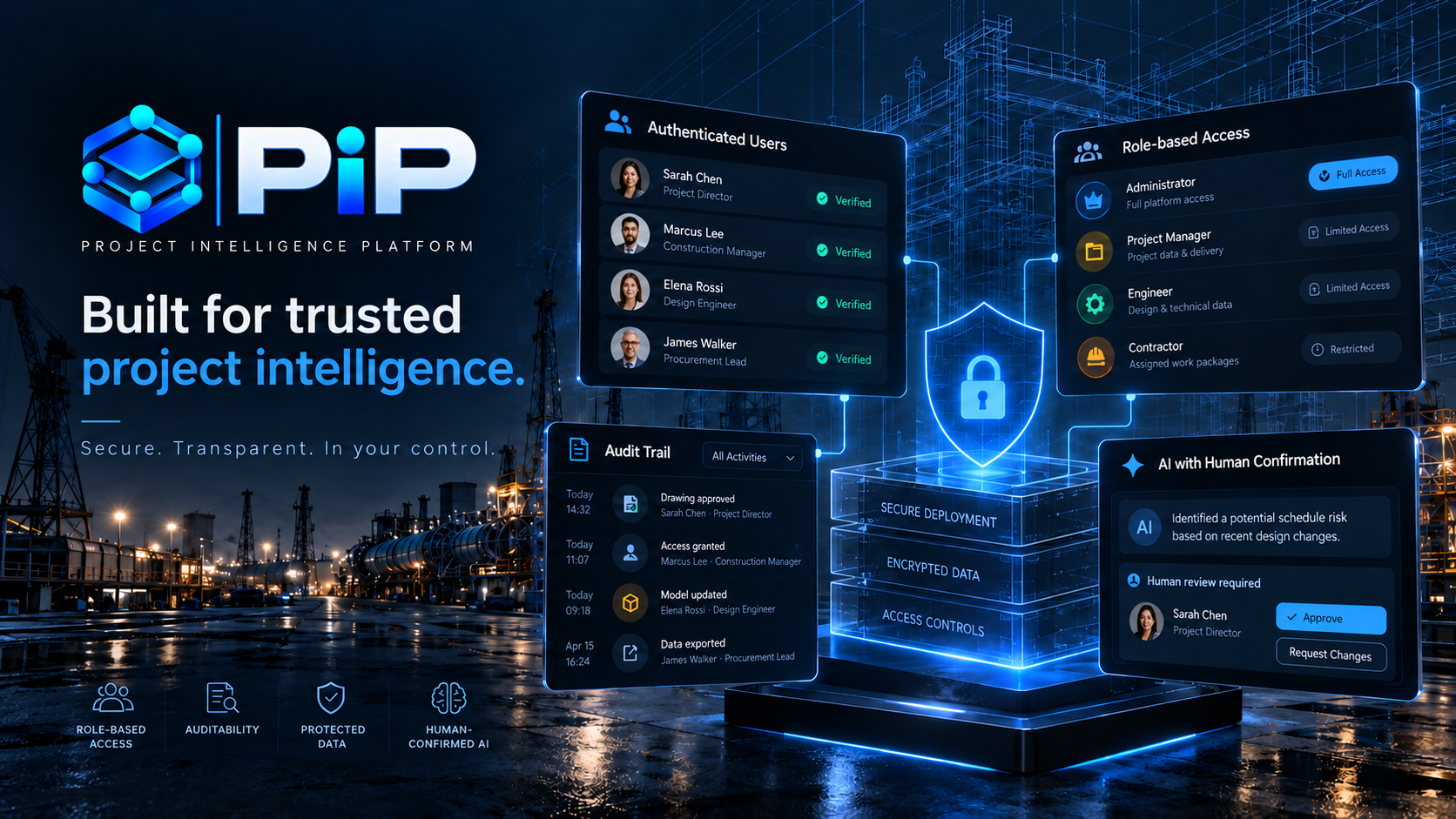
Role-aware access, auditability, protected project data and human confirmation are designed into the product direction.
Provenance and history
Important information is designed to retain its source and project history.
Conflict surfacing
Contradictions should be brought forward—not silently overwritten.
Human control
Permissions, confirmation and approval are part of the architecture for consequential actions.
CAD, ERP, QA and document systems can remain authoritative in their domains. PIP is designed to connect approved information at the project level. Specific connectors are a future integration direction unless explicitly confirmed.